Ensuring reliable vaccine distribution together during the flu season
Vaccine distribution places higher demands on logistics than many other types of pharmaceuticals. Volumes rise sharply during the flu season, delivery windows are narrow and temperature control must hold from the warehouse to the final vaccination point. For manufacturers, predictable and compliant distribution is essential. For distributors, planning and execution must run without interruption.
19.1.2026
Oriola has worked with GlaxoSmithKline (GSK) in Sweden for more than two decades. This long relationship shows how close cooperation, clear roles and steady communication support a smooth and secure supply chain during the busiest period of the year.
Why vaccines require a different approach
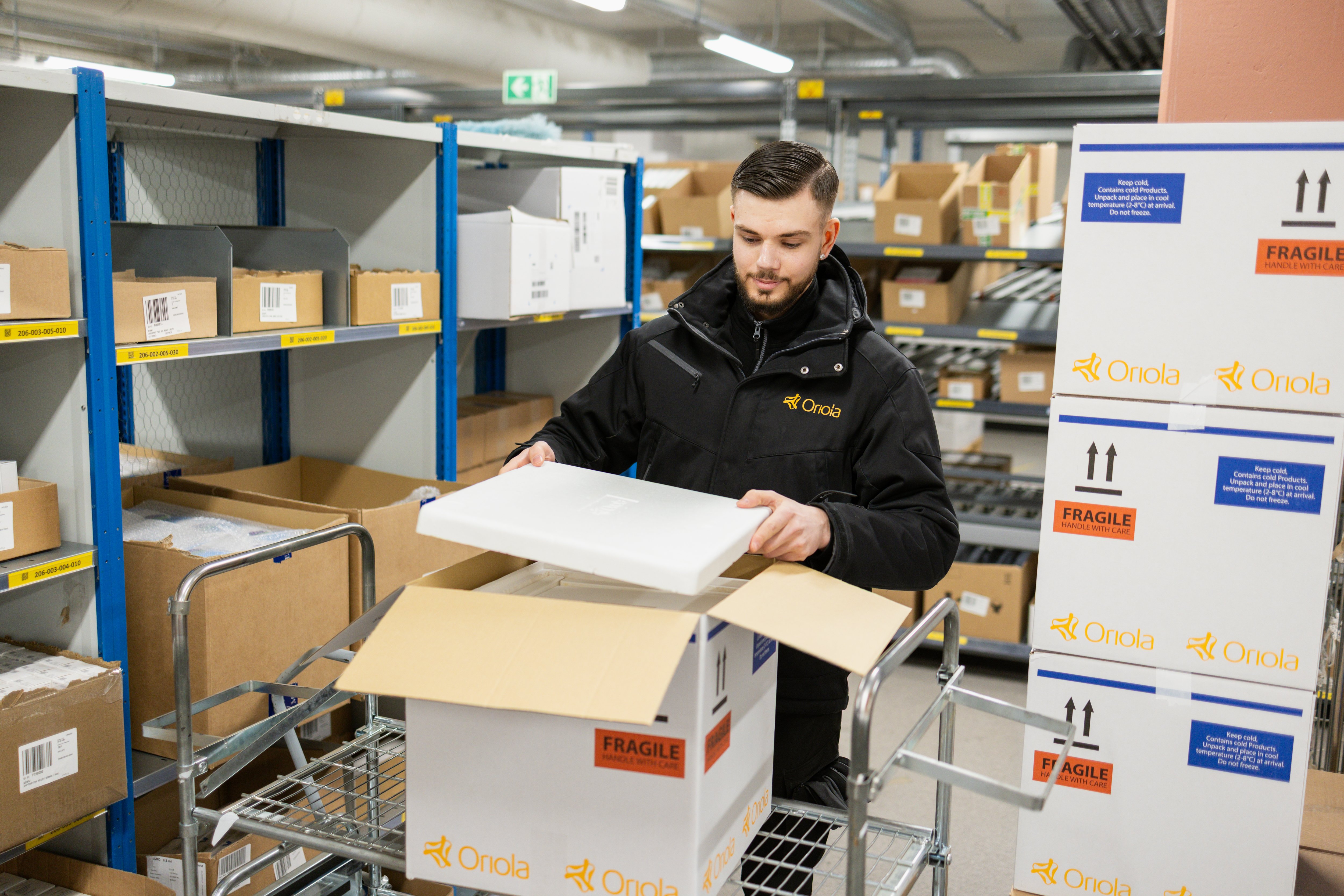
Vaccines demand precise handling. Most require cold chain conditions, and some must be kept frozen. This means no tolerance for delays or re-deliveries. Many end customers also have limited opening hours; for example, school nurses who are available only a few hours every second week. A missed delivery slot can easily disrupt an entire vaccination plan.
Scale adds to the complexity. In Sweden alone, Oriola distributes vaccines to around 6000 end customers. Each one needs reliable deliveries, correct pack sizes and steady temperature control throughout the process.
Preparing for the flu season
The flu season starts long before the first vaccinations are given. Once the WHO has decided which strains to include for the year, GSK begins production. Oriola then plans inbound volumes, storage and delivery routes to ensure readiness for the first shipments, which typically arrive at the warehouse in the end of August.
In 2025, GSK accounted for around 70 percent of the Swedish flu vaccine market. The company delivered 1.4 million doses to Sweden, and Oriola handled roughly 2.3 million doses in total. These volumes place high pressure on both sides to keep lead times short and daily workflows predictable. The 2025 season’s delivery window - set by the Swedish regions - was unusually tight, spanning two days instead of five, which increased the need for coordinated planning and fast execution.
The value of daily contact
During high season, the basics matter. GSK maintains daily communication with Oriola, supported by a dedicated contact person who handles operational issues and follows deliveries closely.
"We speak with Oriola more or less every day, and that continuity makes a difference. Our contact person is always there when needed, which encourages us to do the same. During the flu season everything is larger in scale, but the way we work together stays the same - clear, responsive and dependable." says Erica Carlsson, Business Unit Manager Vaccines, GSK.
The same routines continue throughout the year, which means the seasonal peak builds on an already stable working relationship.
Predictable inbound deliveries also support efficiency. GSK ships from its central warehouse with fixed-day arrivals to Oriola. This consistency reduces disruptions and helps warehouse teams prepare capacity and resources.
Shared focus on quality
"Operational improvements form a continuous part of the cooperation. Over the years, Oriola and GSK have run joint development sessions covering pallets, pack sizes, inbound handling and process flow. These efforts improve accuracy, reduce waste and reinforce good distribution practice across the chain." says Kristina Caporicci, Key Account Manager Oriola.
Clear communication and meeting forums with ADDA (coordinating regional tenders) is another key element. Early orders and staggered order placement help ensure vaccines reach the regions when needed. This is especially important when volumes are compressed into a short delivery period.