Nordic health and wellbeing consumer trends 2026 for retail and pharmacy
Health and wellbeing have been a defining megatrend for some years now and the importance continues to grow. Across the Nordic markets, a lot of consumers are increasingly engaged, informed and intentional about how they support their health throughout life. In 2026 wellbeing is about making conscious choices that combine nutrition, prevention, technology and guidance.
22.1.2026
Based on Oriola's latest consumer trend work, we see growing demand for brands and products that support particular needs and make it easy for different target groups to take care of specifichealth and wellbeing concerns. These trends create new opportunities for all of us, for brands, suppliers and retailers.
Nutrition as a preventive wellness tool
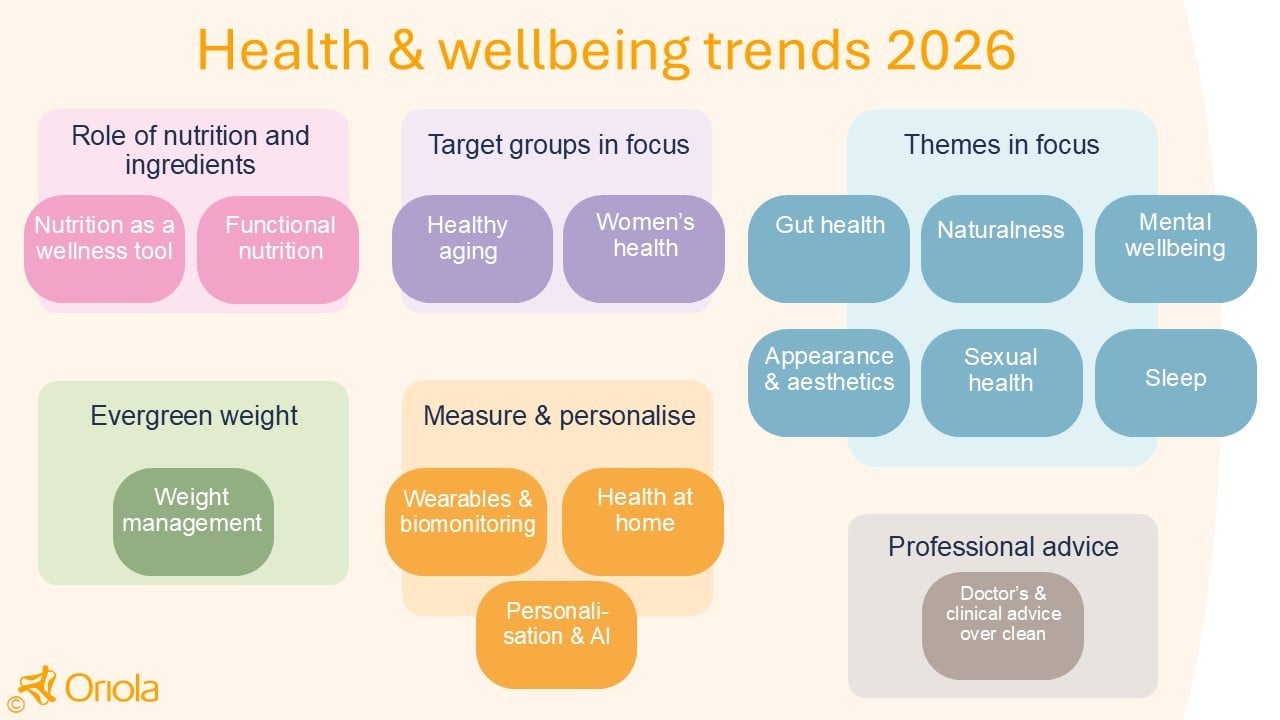
Nutrition is increasingly seen as a key wellness tool not just a source of energy. Consumers are focusing on functional foods, vitamins, minerals and supplements that support digestion, immunity, energy and resilience. This reflects a broader move toward preventive health where people aim to strengthen their wellbeing before problems arise.
Functional nutrition is becoming mainstream, but expectations are rising. Consumers want to understand why a product works, what ingredients it contains and how it fits into daily life. In the Nordic markets, where health literacy is high, transparency and science-backed benefits are essential.
Solutions for specific life stages
One of the strongest developments towards 2026 is the growing focus on specific target groups and life stages. One-size-fits-all solutions are losing relevance as consumers expect products tailored to their unique needs.
As populations age, demand is growing for solutions that support healthy aging and longevity, mobility, cognitive health and appearance. Consumers are not looking to reverse aging, but to maintain quality of life for as long as possible. This drives interest in preventive supplements, skincare and digital health services such as virtual therapies and at-home testing.
Women’s health is moving from niche to mainstream. Products related to menopause, pregnancy, postpartum recovery and hormonal balance are gaining visibility and acceptance. Trust, education and professional endorsement are especially important, as consumers seek reliable solutions for complex and often under-addressed needs.
Holistic wellbeing starts inside
Health and wellbeing are increasingly understood as holistic and interconnected. Consumers no longer separate physical health, mental wellbeing, appearance, and lifestyle – they see them as parts of the same system.
Gut health continues to gain importance as awareness grows around the microbiome’s role in digestion, immunity, mood and energy. Probiotics, microbiome testing, and personalized digestion solutions are becoming more common, especially among consumers seeking tailored approaches to wellbeing.
Mental wellbeing remains a growing concern, particularly among younger generations It has been reported they are facing burnout, economic uncertainty and digital overload. As a result, demand is increasing for solutions that support stress management, emotional balance and resilience.
Sleep is a fundamental pillar of health and wellbeing, influencing both physical recovery and mental resilience. As awareness of its importance grows, consumers increasingly view good sleep as essential for everyone’s wellbeing, driving demand for both natural and clinically supported sleep solutions.
The lines between beauty and wellness are blurring, especially among Gen Z, for whom appearance is closely tied to overall wellbeing. Sexual health is also becoming a more open and accepted part of the wellness conversation. Across categories, consumers increasingly prefer natural and minimally processed options but not at the expense of effectiveness.
Weight management remains an evergreen challenge within health and wellbeing, as people seek sustainable ways to support their health throughout life. While interest in medical solutions has increased, consumers are also actively looking for natural, nutrition- and lifestyle-based ways to support weight management.
Decision drivers: Measure, personalise and trust
Three factors stand out as key decision drivers: measurement, personalisation and trust. At-home diagnostics and wearables are becoming more common. Instead of people wanting more than data, they want actionable insights that help them improve their health.
Demand for personalised wellness solutions is growing rapidly. Advances in AI are enabling tailored approaches across nutrition, supplements, and lifestyle support, making personalisation an expected standard rather than a premium feature.
Healthcare professional advice remains one of the strongest influences on purchasing decisions. As a countertrend for naturalness some consumers increasingly prioritise clinical efficacy over “clean” claims. Trust is built through evidence, transparency, and professional endorsement. However, Gen Z differs from older people here heavily.
Shaping the Nordic health & wellbeing future
Health and wellbeing in 2026 are defined by prevention, personalisation, and professionalism. By combining deep consumer insight, a broad specialist portfolio, and strong Nordic market expertise, we want to support our partners in building relevant, trusted, and future-ready health and wellbeing offerings. Together we create health for life.
Outi Lindberg, Head of Marketing, Oriola
Sources; PWC Megatrends, Mintel Market Intelligence, McKinsey trend reports et al.